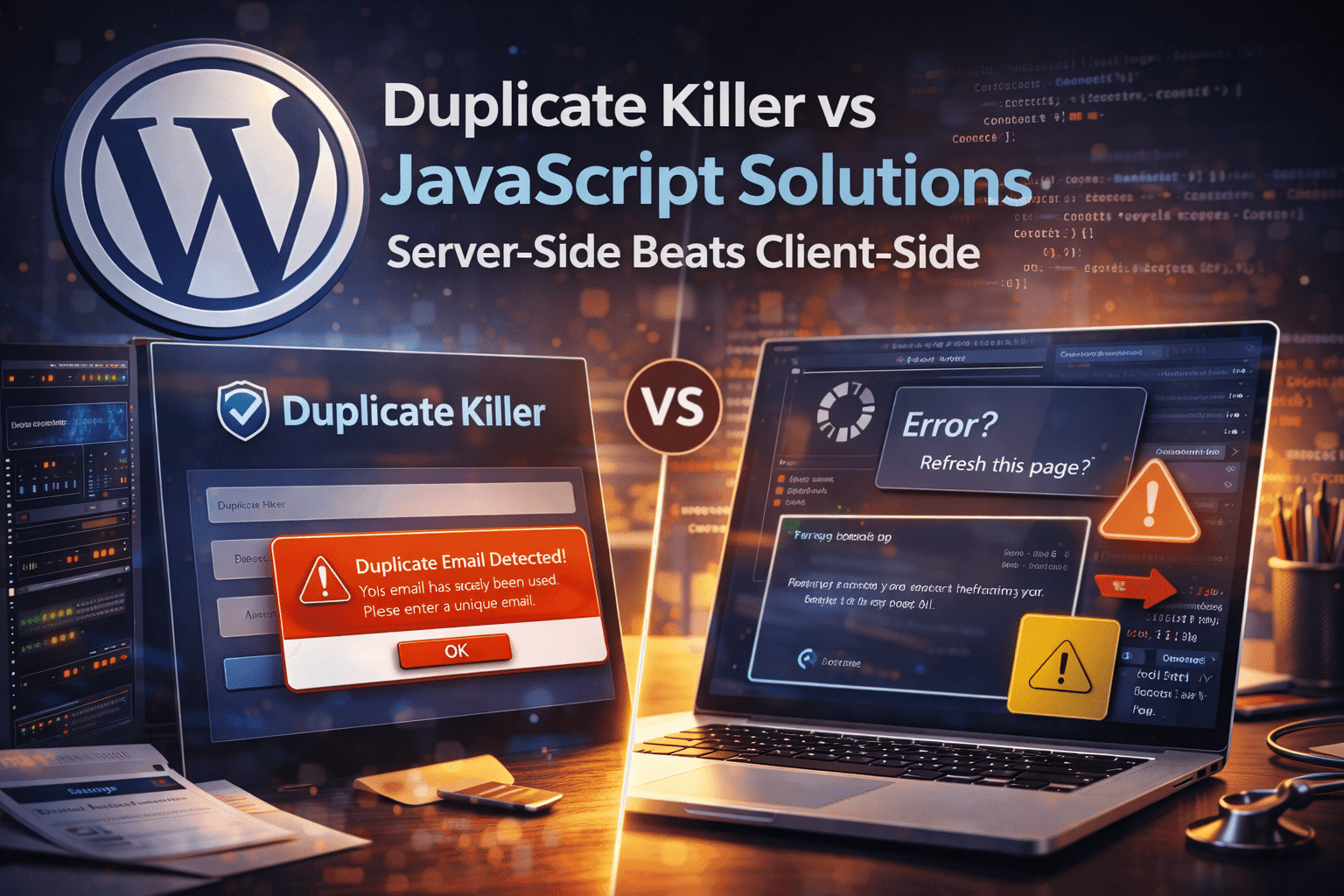
Preventing duplicate form submissions is often approached using JavaScript-only solutions. While these methods may look effective on the surface, they fail in many real-world scenarios.
Understanding the difference between client-side validation and server-side duplicate prevention is critical for reliable WordPress forms.
What Are JavaScript-Only Solutions?
JavaScript-only solutions attempt to prevent duplicate submissions by acting in the browser. Common techniques include:
- Disabling the submit button after click
- Using JavaScript flags or session variables
- Blocking double-click events
- Simple front-end form locks
These methods rely entirely on the user’s browser behaving as expected.
The Hidden Problems With JavaScript-Only Duplicate Prevention
Client-side solutions fail more often than developers realize. They break under common conditions:
- JavaScript disabled or blocked
- Slow network connections
- Page refresh after submission
- Browser retries or back button usage
- Multiple tabs or devices
When this happens, duplicate submissions pass through without resistance.
Why JavaScript Cannot Guarantee Data Integrity
JavaScript operates before data reaches the server. It cannot verify what already exists in the database. This means it has no knowledge of previous submissions.
As a result:
- Duplicates still reach the database
- Email notifications are sent multiple times
- CRMs and analytics are polluted
How Duplicate Killer Solves the Problem Properly
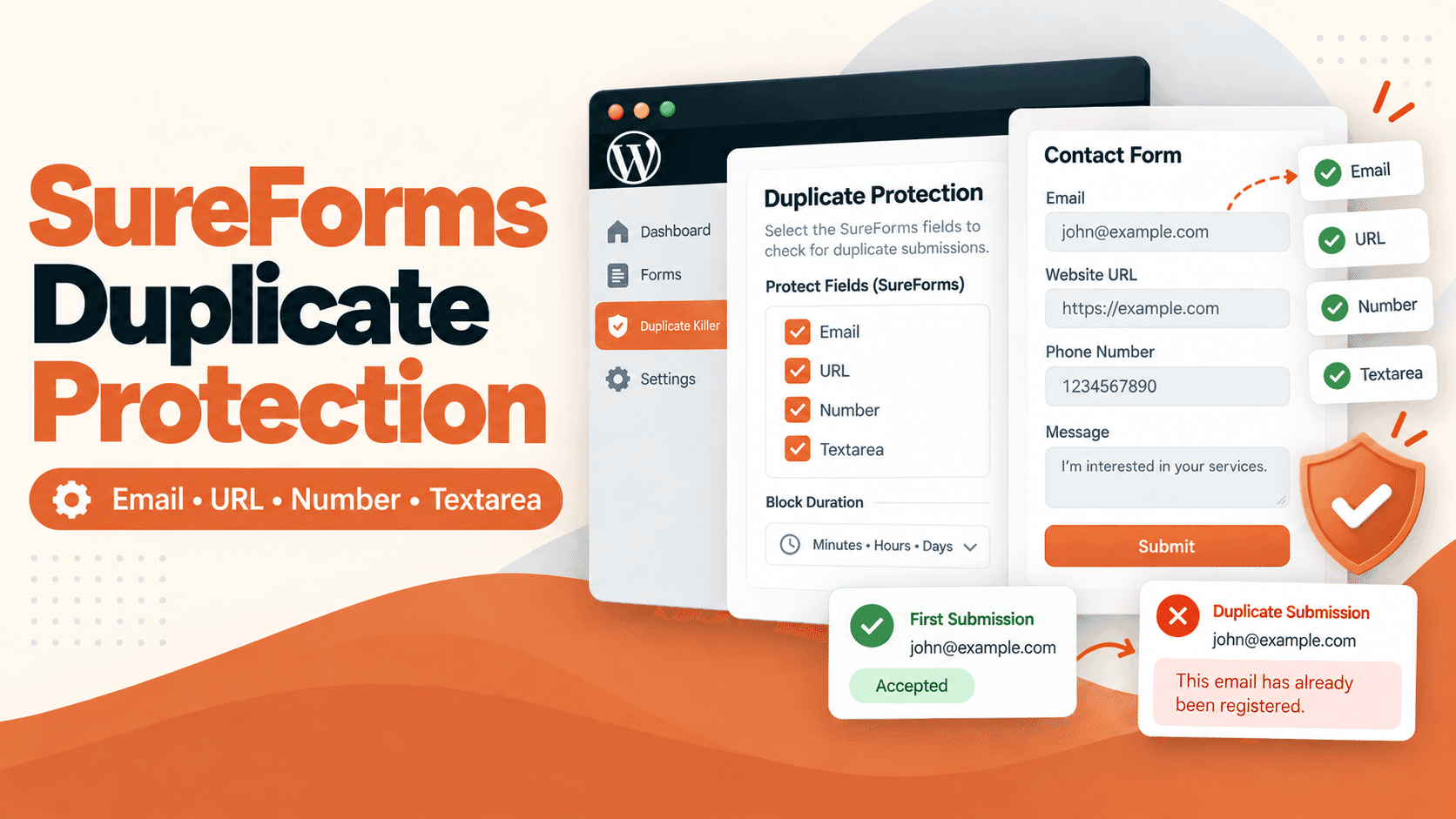
Duplicate Killer works at server level. Instead of guessing user behavior, it validates the actual submitted data against existing entries.
This approach ensures:
- True uniqueness validation
- Protection even if JavaScript fails
- No dependency on browser behavior
- Consistent results across devices
Real-World Scenario
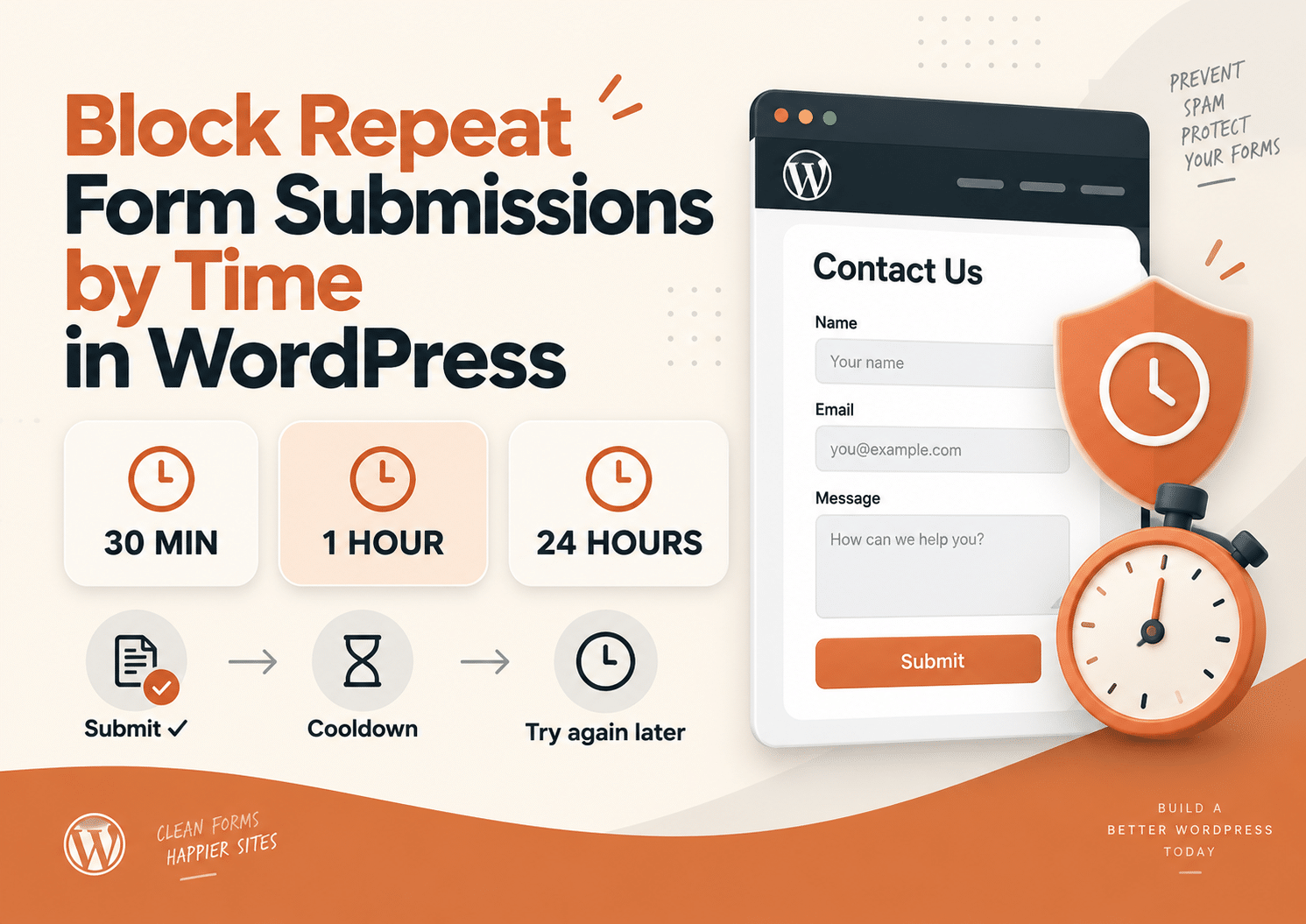
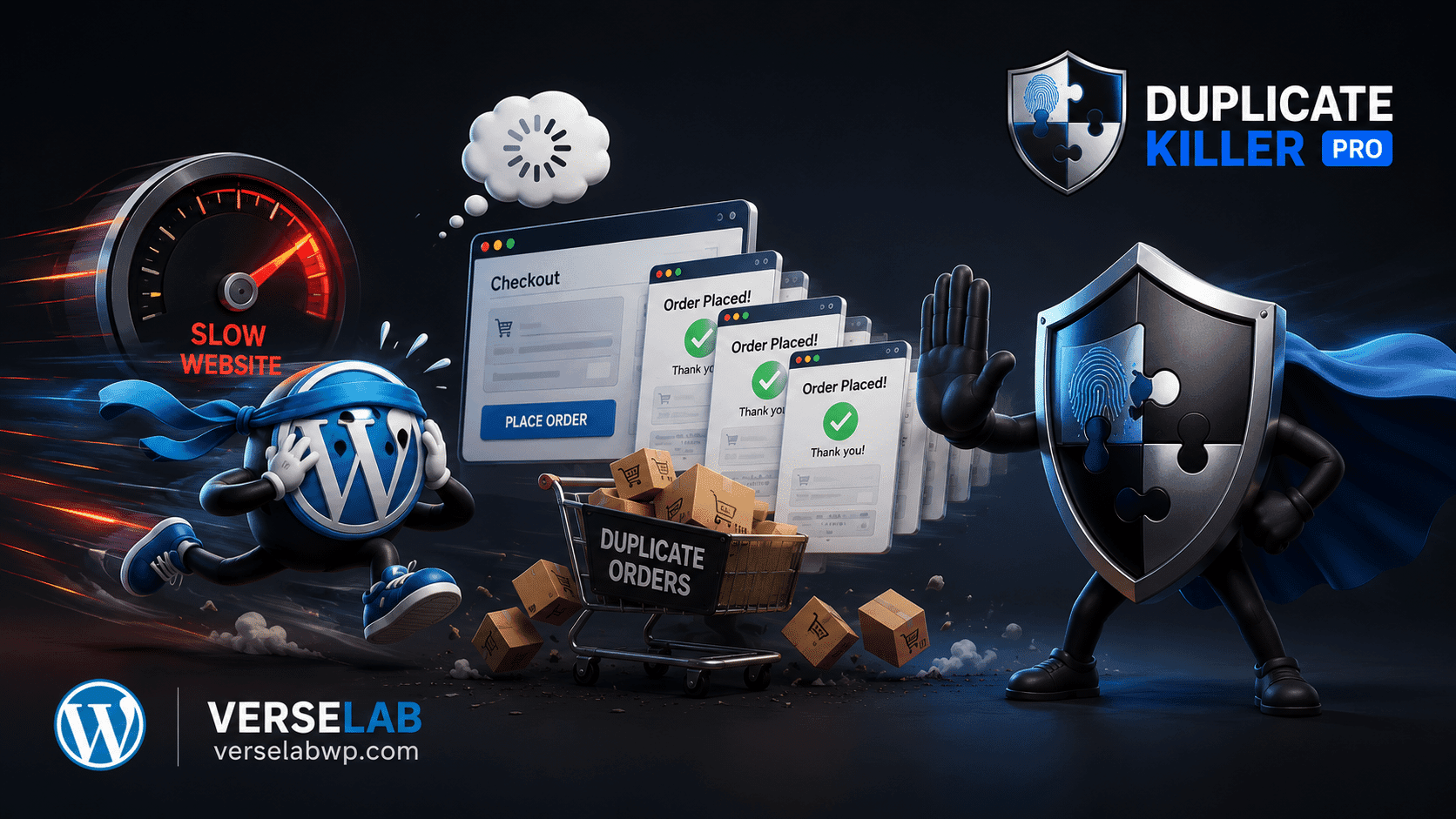
A user submits a form, refreshes the page, and submits again. JavaScript-only solutions fail because the page reload resets the script.
Duplicate Killer blocks the second submission instantly, because the data already exists.
UX Impact: Server-Side Wins
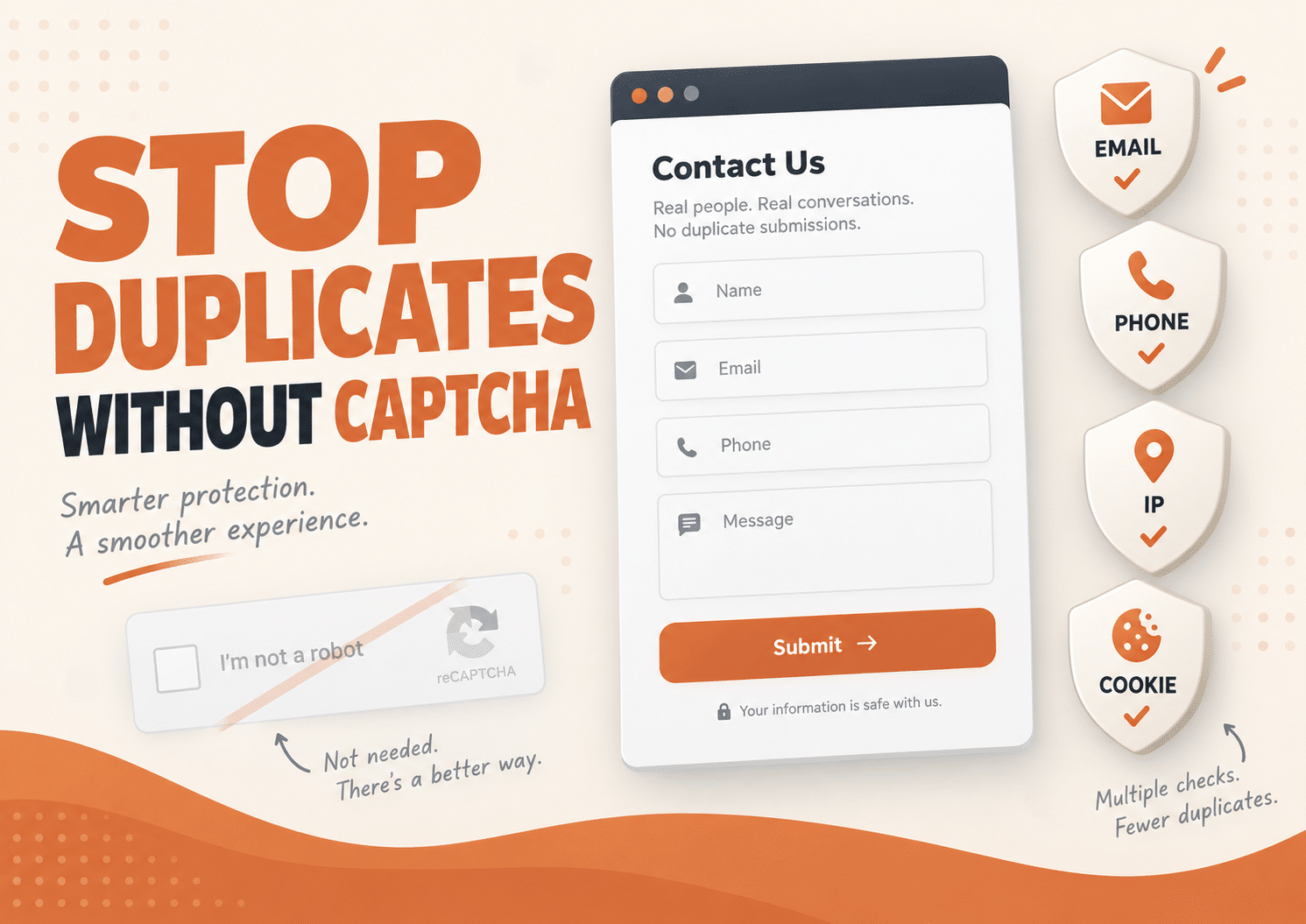
JavaScript solutions often require visual tricks or delays that impact UX. Duplicate Killer works silently, without adding steps, CAPTCHAs, or friction.
The Verdict
JavaScript-only solutions are a weak layer of protection. They may reduce accidental duplicates, but they cannot guarantee clean data.
Duplicate Killer delivers reliable, server-side duplicate prevention that JavaScript alone cannot match.