Duplicate orders? Not anymore. WooCommerce protection is now included!
Upgrade to PRO for Checkout Blocks, analytics and smart order linking.

How Duplicate Killer Cookie Protection Works (and How to Stay GDPR-Compliant)

How Cookie-Based Duplicate Protection Works (GDPR Safe)

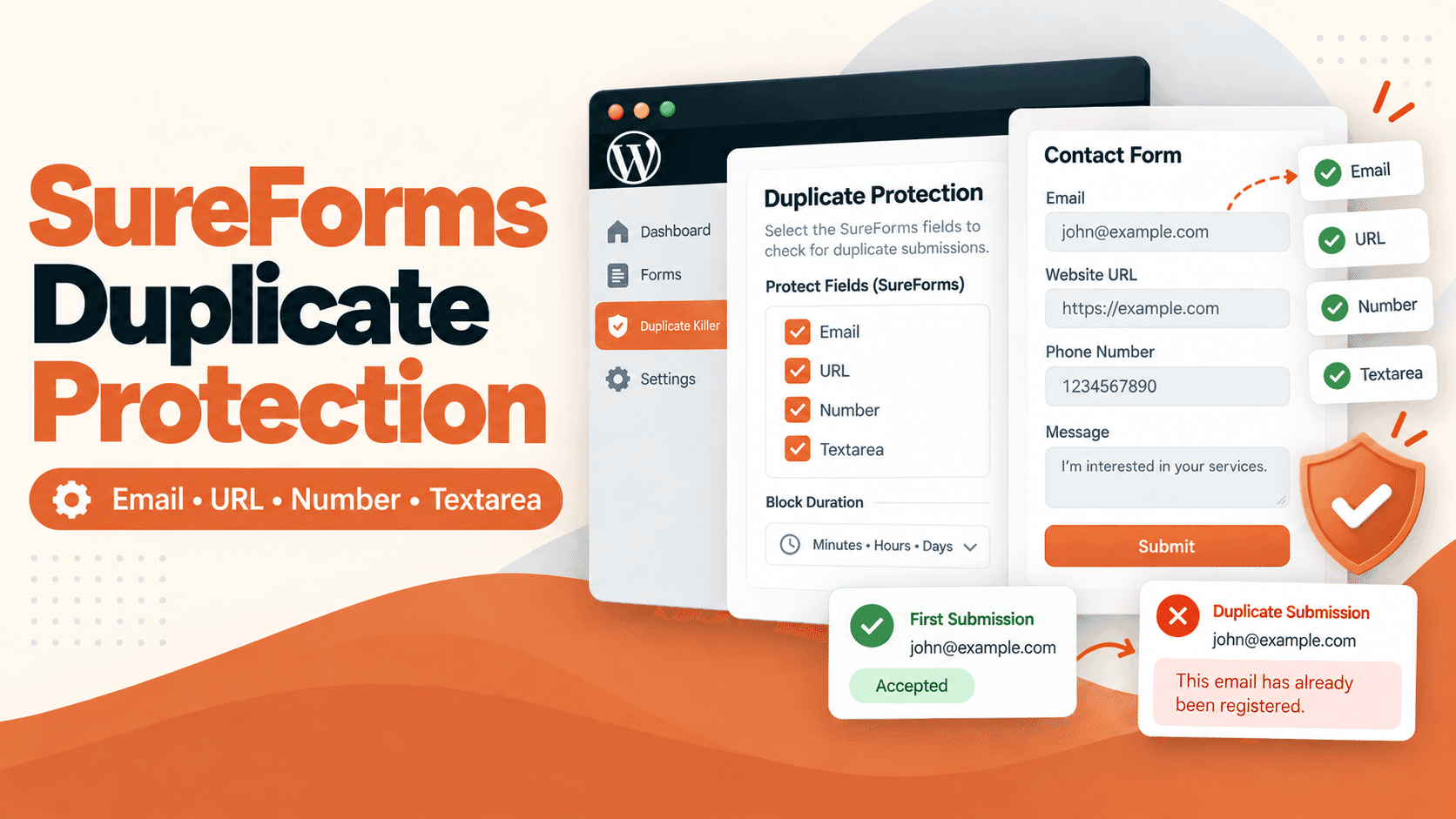
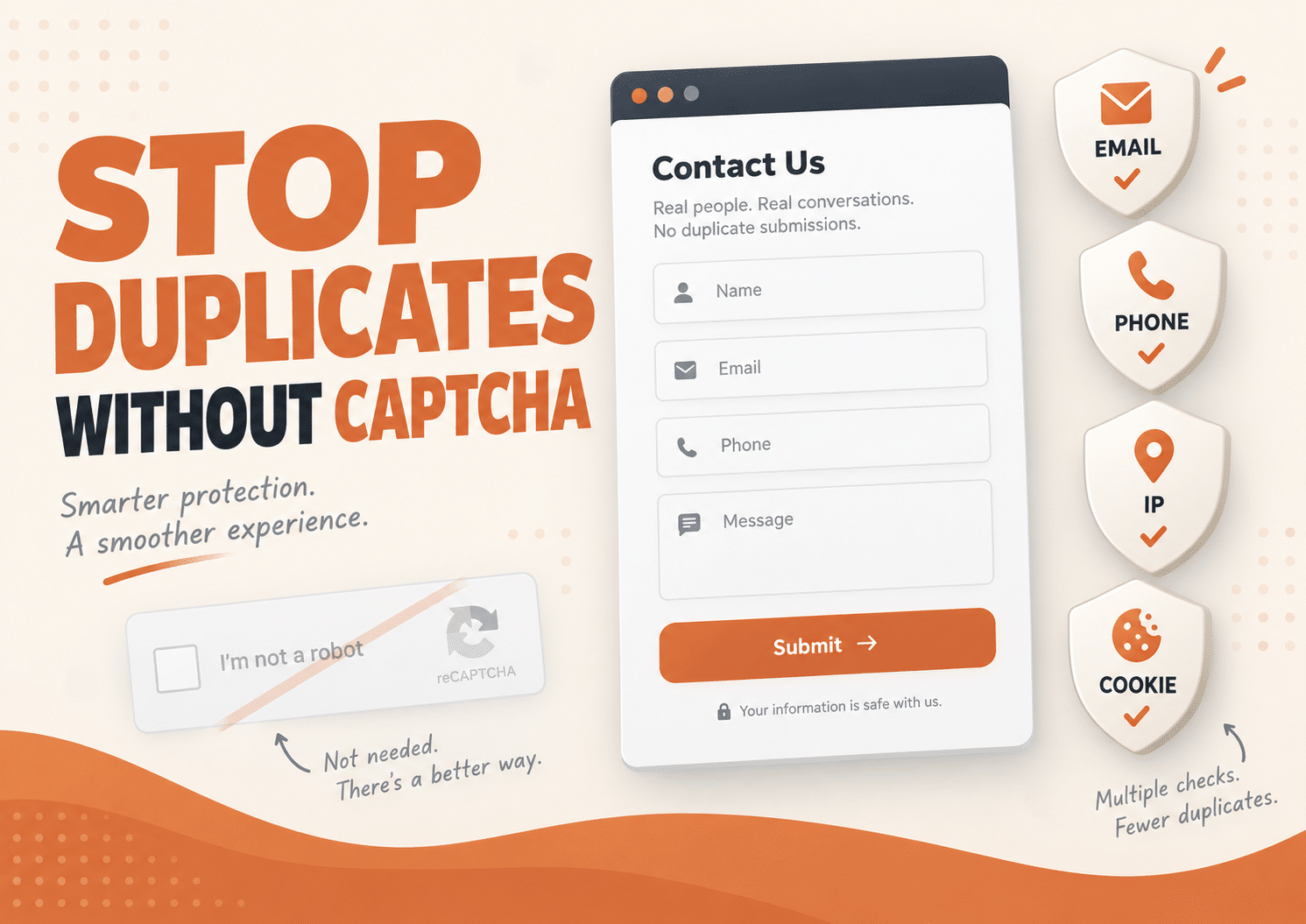
Duplicate submissions are one of the most common issues in WordPress forms. They affect data quality, analytics, lead management, and automation workflows. To address this problem without adding friction (like CAPTCHAs), Duplicate Killer includes an optional cookie-based protection feature.

This article explains how the cookie feature works, what it does and does not do, and what site owners should configure to remain GDPR-compliant.


What Is the Duplicate Killer Unique user per form?

When enabled, Duplicate Killer creates a small functional cookie in the visitor’s browser. This cookie acts as a unique, anonymous browser identifier used only to detect and prevent duplicate form submissions.

  • The cookie is generated client-side.
  • It contains a random, non-identifiable token.
  • It is scoped per form, not globally.
  • It is never shared with third parties.

The cookie exists solely to answer one question: “Has this browser already submitted this specific form?”


What the Cookie Does Not Do

To avoid confusion, it is important to clarify what this cookie is not used for:

  • It does not track users across pages or sessions.
  • It does not store names, emails, IP addresses, or personal data.
  • It does not enable analytics, profiling, or advertising.
  • It does not identify a real person.

The cookie’s only purpose is technical integrity and abuse prevention.


Per-Form Cookies (Why This Matters)

Duplicate Killer does not use a single global cookie. Instead, a separate cookie is created for each form where cookie protection is explicitly enabled.

Example cookie names:

  • dk_form_cookie_cf7_72
  • dk_form_cookie_elementor_forms_1fc7fb0
  • dk_form_cookie_formidable_contact-us_2

This design ensures:

  • Submitting one form does not block other forms.
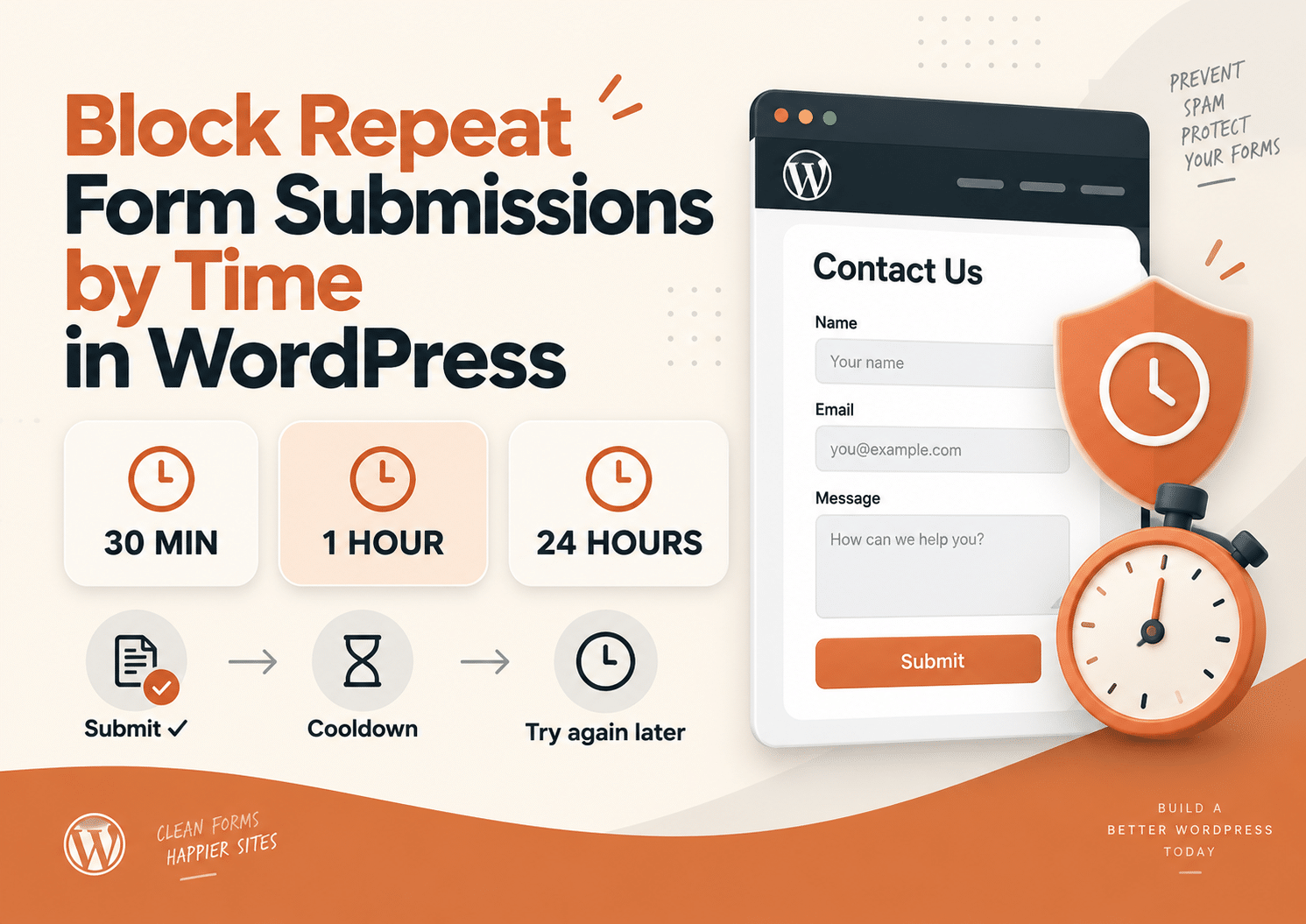
  • Each form can have its own expiration period.
  • Cookie usage is minimized to the strict technical need.

Is This Cookie GDPR-Compliant?

From a GDPR perspective, this cookie generally falls under the category of functional or strictly necessary cookies, because:

  • It is required to prevent abuse and duplicate submissions.
  • It supports a user-requested action (form submission).
  • It does not process personal data.

However, final responsibility always lies with the site owner, because cookie classification and consent requirements may vary by jurisdiction, regulatory interpretation, and local legal advice.


Recommended GDPR-Safe Configuration (Best Practice)

To remain on the safest possible legal ground, Duplicate Killer is designed to allow explicit control over when cookies are created.

Recommended approach for maximum compliance:

  • Enable cookie protection only for forms that require it.
  • Set the cookie duration to the minimum practical number of days.
  • Ensure the cookie is categorized as Functional or Necessary in your cookie banner.
  • If your site uses a consent management platform (CMP), configure it so functional cookies are allowed only after user consent.

If you are unsure whether consent is required in your case, the safest option is to require functional cookie consent before enabling the feature.


Transparency for Visitors

For full transparency, it is recommended to mention this cookie in your Cookie Policy. A simple and clear description is sufficient.

Example wording:

Duplicate Killer uses a functional cookie to prevent duplicate form submissions. This cookie does not store personal data and is not used for tracking or advertising.


Developer Responsibility vs. Site Owner Responsibility

Duplicate Killer provides the technical tools to prevent duplicate submissions in a privacy-respecting way.

The plugin does not automatically decide your legal obligations. Instead:

  • The plugin limits cookie usage to the strict technical minimum.
  • The site owner decides whether and how the cookie is enabled.
  • The site owner is responsible for consent configuration and legal compliance.

This separation ensures flexibility while allowing site owners to comply with GDPR, ePrivacy, and similar regulations according to their specific requirements.


Summary

  • Duplicate Killer cookies are functional and per-form.
  • No personal data is stored or transmitted.
  • The feature improves data quality without user friction.
  • For maximum legal safety, enable cookies only after functional consent.

Used correctly, the cookie-based protection offers a clean, privacy-first alternative to CAPTCHAs while maintaining full control and transparency.


Related Articles

Slow websites create more Duplicate Orders than you think

Slow websites create more Duplicate Orders than you think

FAQ: Duplicate WooCommerce Orders ❓ Why do slow websites create duplicate WooCommerce orders? Customers often think checkout failed when pages load slowly or freeze temporarily. The natural reaction is to click the “Place Order” button again, creating repeated submissions. ❓ Does CAPTCHA stop duplicate WooCommerce orders? No. CAPTCHA mainly blocks bots and spam traffic. Real…
The Psychology Behind Duplicate Form Submissions

The Psychology Behind Duplicate Form Submissions

Most businesses think duplicate form submissions are caused by technical problems. But in reality, many duplicate submissions happen because of psychology. People click buttons emotionally, not logically. And when websites fail to provide reassurance, users naturally repeat actions. This is one of the biggest hidden reasons behind duplicate form submissions in WordPress. Why Human Psychology…
Why Users Submit Forms Multiple Times Even When They Don’t Want To

Why Users Submit Forms Multiple Times Even When They Don’t Want To

Duplicate form submissions are often treated as a technical problem. But in many cases, the real cause is human behavior. Most users do not intentionally submit the same form multiple times. They simply think the form did not work. This is one of the biggest reasons why duplicate form submissions happen on WordPress websites. Why…
Why Global Elementor Forms Create Hidden Duplicate Problems

Why Global Elementor Forms Create Hidden Duplicate Problems

Elementor duplicate forms can become a hidden problem when the same contact form is reused across multiple pages, templates, popups, or global sections. At first, everything looks normal. The form appears correctly.Leads arrive in your inbox.Visitors can submit without issues. But behind the scenes, your WordPress site may be treating similar forms as separate forms…
Why Form Spam and Duplicate Entries Are Different Problems

Why Form Spam and Duplicate Entries Are Different Problems

Duplicate entries and form spam are often confused by WordPress website owners. Many businesses install anti-spam plugins successfully, but duplicate entries can still damage CRM systems, analytics, and lead quality. And misunderstanding the difference often leads businesses to install the wrong type of protection. A CAPTCHA plugin may reduce bots successfully, but your CRM can…
Why Duplicate Leads Hurt Facebook Ads Optimization

Why Duplicate Leads Hurt Facebook Ads Optimization

Duplicate leads can seriously damage Facebook Ads optimization without most advertisers realizing it. When duplicate leads enter your CRM repeatedly, your campaigns may start optimizing using inaccurate conversion data and misleading audience signals. They change creatives.They increase budgets.They test new audiences. But many never realize the real problem is hidden inside their lead data. Duplicate…
The Hidden Cost of Duplicate Orders During Black Friday

The Hidden Cost of Duplicate Orders During Black Friday

Duplicate WooCommerce orders become a massive problem during Black Friday sales. Customers click checkout buttons multiple times, pages freeze under heavy traffic, and stores suddenly face duplicate payments, refunds, and inaccurate analytics. But for many WooCommerce stores, it also creates a hidden problem that quietly damages operations behind the scenes: duplicate orders. Most store owners…
How to Stop Duplicate WooCommerce Orders (Without Annoying Your Customers)

How to Stop Duplicate WooCommerce Orders (Without Annoying Your Customers)

Duplicate WooCommerce orders are more common than most store owners realize. A customer clicks the “Place Order” button twice because the page freezes for a second.Another refreshes the checkout page after payment.Someone on mobile taps repeatedly because they think nothing happened. Suddenly, you have: And the worst part? Most store owners don’t notice the problem…
Go to VerseLabWP homepage
© Copyright 2025 BITSTRUCT SRL. All Rights Reserved.