If you are dealing with duplicate form submissions in WordPress, it’s easy to get confused by tutorials that explain how to duplicate a form instead of fixing the actual problem.
These are two completely different concepts, but they are often mixed together — by users, by tutorials, and even by Google search results.
This article explains the difference clearly and shows why confusing these two problems leads to the wrong solutions.
What Is a Duplicate WordPress Form?
A duplicate WordPress form means creating a copy of an existing form so you can reuse it or modify it without starting from scratch.
This is a design and workflow feature, not a bug.
Typical reasons to duplicate a form:
You want a similar form with small changes
You need the same structure on multiple pages
You want to A/B test different form layouts
Duplicating a form happens before any visitor interacts with it. It has nothing to do with spam, bots, or data quality.
What Is a Duplicate Form Submission?
A duplicate form submission happens when the same data is submitted more than once through a form.
This is a data integrity problem, not a design feature.
Common examples:
The same email address is submitted multiple times
The same phone number appears repeatedly in entries
A form sends the same message twice
Submissions are duplicated after page refresh
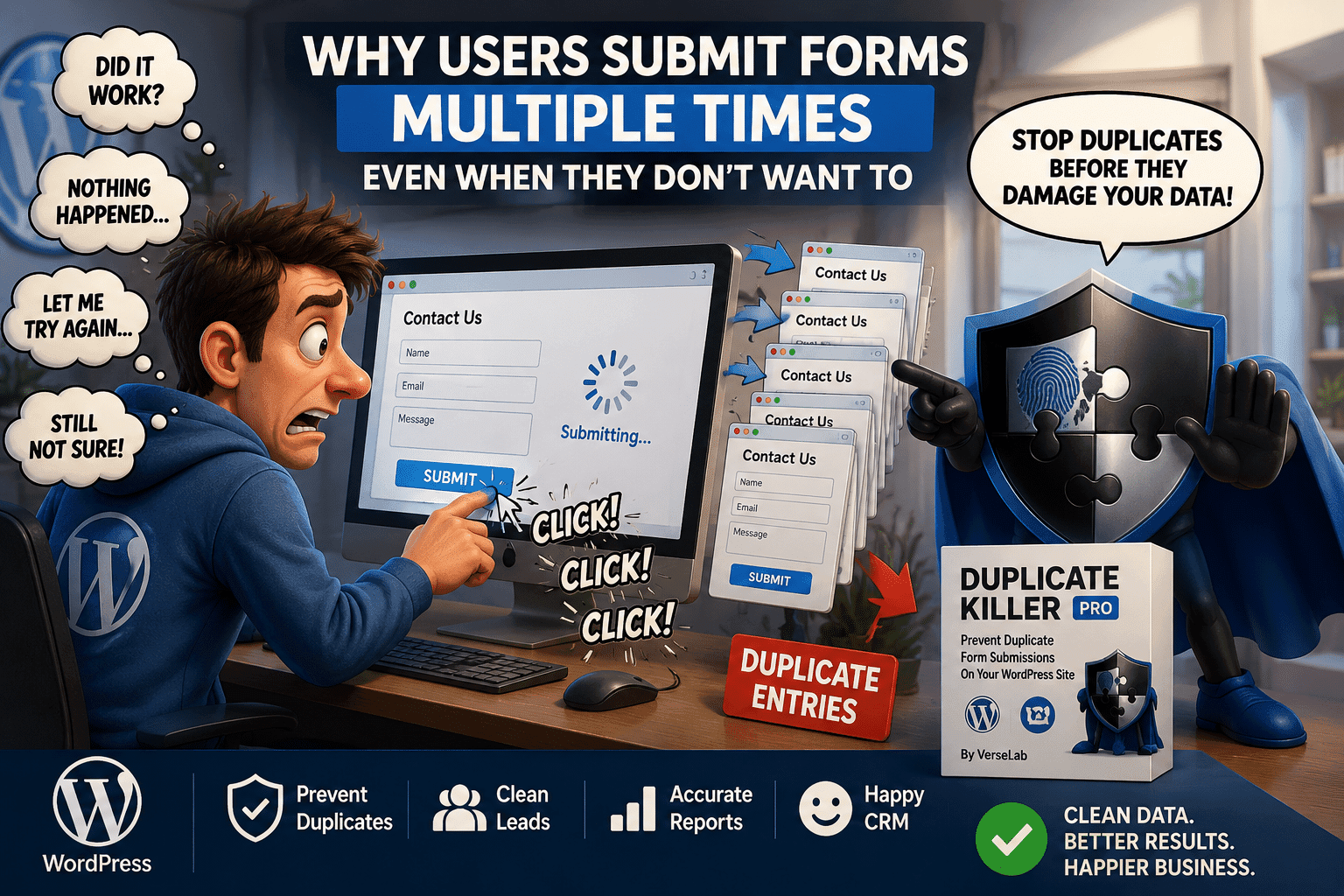
Users click “Submit” multiple times
Duplicate submissions happen after the form is live, during real user interaction.
Why These Two Problems Are Often Confused
The confusion exists because both issues use the word “duplicate”, but they describe very different things.
Duplicate Form
Duplicate Submission
Copying a form structure
Repeating the same data
Happens in admin/dashboard
Happens during user submission
Intended behavior
Unwanted behavior
Design convenience
Data quality problem
When users search for “WordPress form duplicate”, Google often assumes they want to copy a form — even when they are actually dealing with spam or repeated submissions.
Why Duplicate Form Tutorials Don’t Solve Duplicate Submissions
Most tutorials about “duplicating a form” focus on:
Copy buttons
Import/export
Reusing layouts
None of these address:
Bots submitting the same data
Users refreshing the page
Double-click submissions
Repeated emails or phone numbers
As a result, users apply the wrong solution and the problem remains.
What Actually Causes Duplicate Form Submissions?
Duplicate submissions are usually caused by:
Page refresh after form submission
Slow server response
Double clicks on the submit button
Mobile network retries
Bots resubmitting the same payload
Forms that allow unlimited identical values
These are normal behaviors — not user errors.
Why CAPTCHA Does Not Fix Duplicate Submissions
CAPTCHA focuses on who submits the form, not what is being submitted.
Even with CAPTCHA enabled:
The same email can be submitted multiple times
Page refresh can resend the form
Human spam is still possible
UX friction increases
CAPTCHA reduces bots, but it does not enforce data uniqueness.
The Correct Fix: Prevent Duplicate Submissions at the Data Level
To stop duplicate submissions, the form must validate submitted values, not just visitors.
If you’re using Fluent Forms on your WordPress website and need a reliable way to prevent duplicate submissions, Duplicate Killer now offers full support. Whether you’re collecting contact requests, quote forms, registrations, bookings, or lead generation forms, Duplicate Killer helps stop users from submitting the same information multiple times. Unlike simple unique field validation, Duplicate…
Most businesses think duplicate form submissions are caused by technical problems. But in reality, many duplicate submissions happen because of psychology. People click buttons emotionally, not logically. And when websites fail to provide reassurance, users naturally repeat actions. This is one of the biggest hidden reasons behind duplicate form submissions in WordPress. Why Human Psychology…
Duplicate form submissions are often treated as a technical problem. But in many cases, the real cause is human behavior. Most users do not intentionally submit the same form multiple times. They simply think the form did not work. This is one of the biggest reasons why duplicate form submissions happen on WordPress websites. Why…
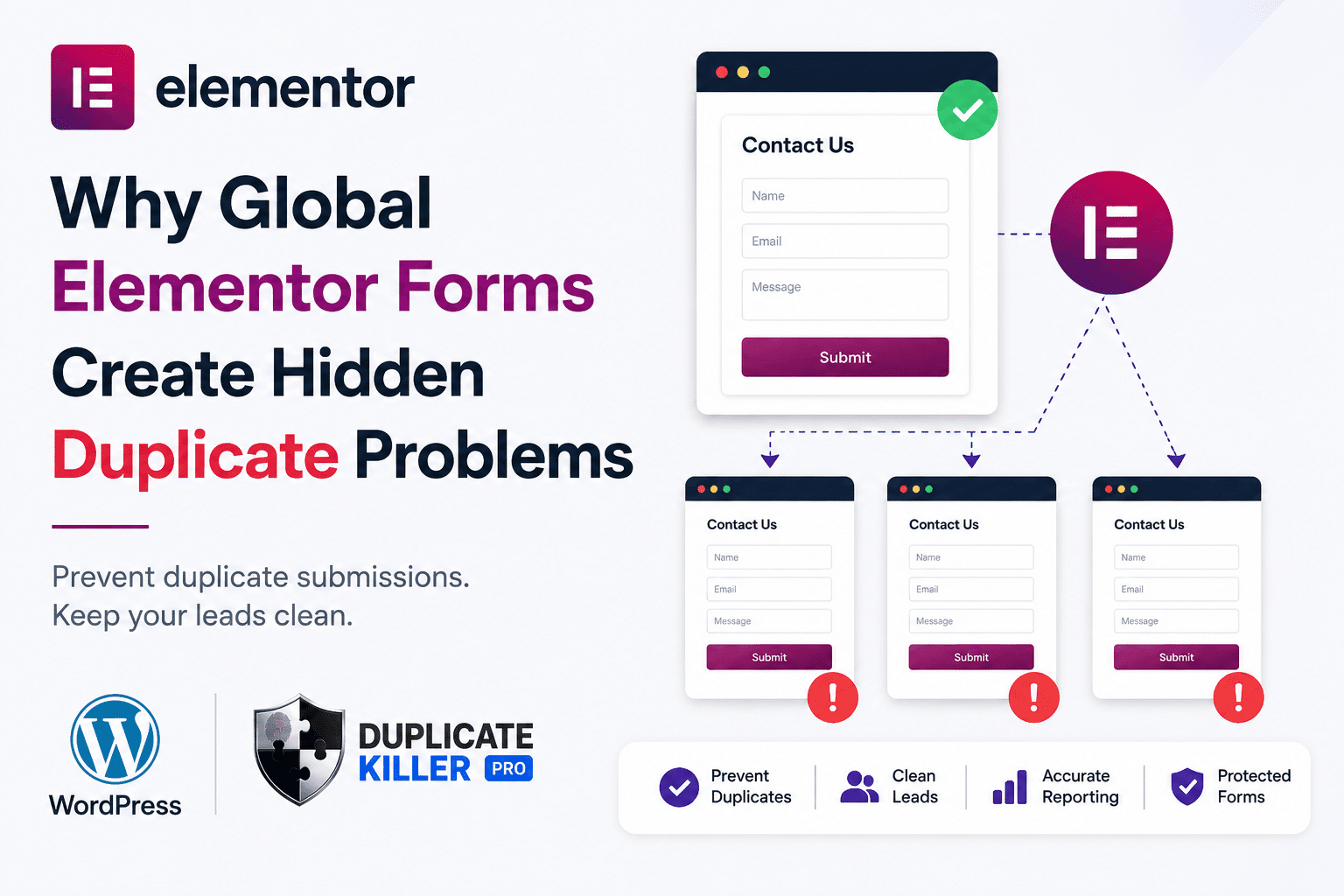
Elementor duplicate forms can become a hidden problem when the same contact form is reused across multiple pages, templates, popups, or global sections. At first, everything looks normal. The form appears correctly.Leads arrive in your inbox.Visitors can submit without issues. But behind the scenes, your WordPress site may be treating similar forms as separate forms…
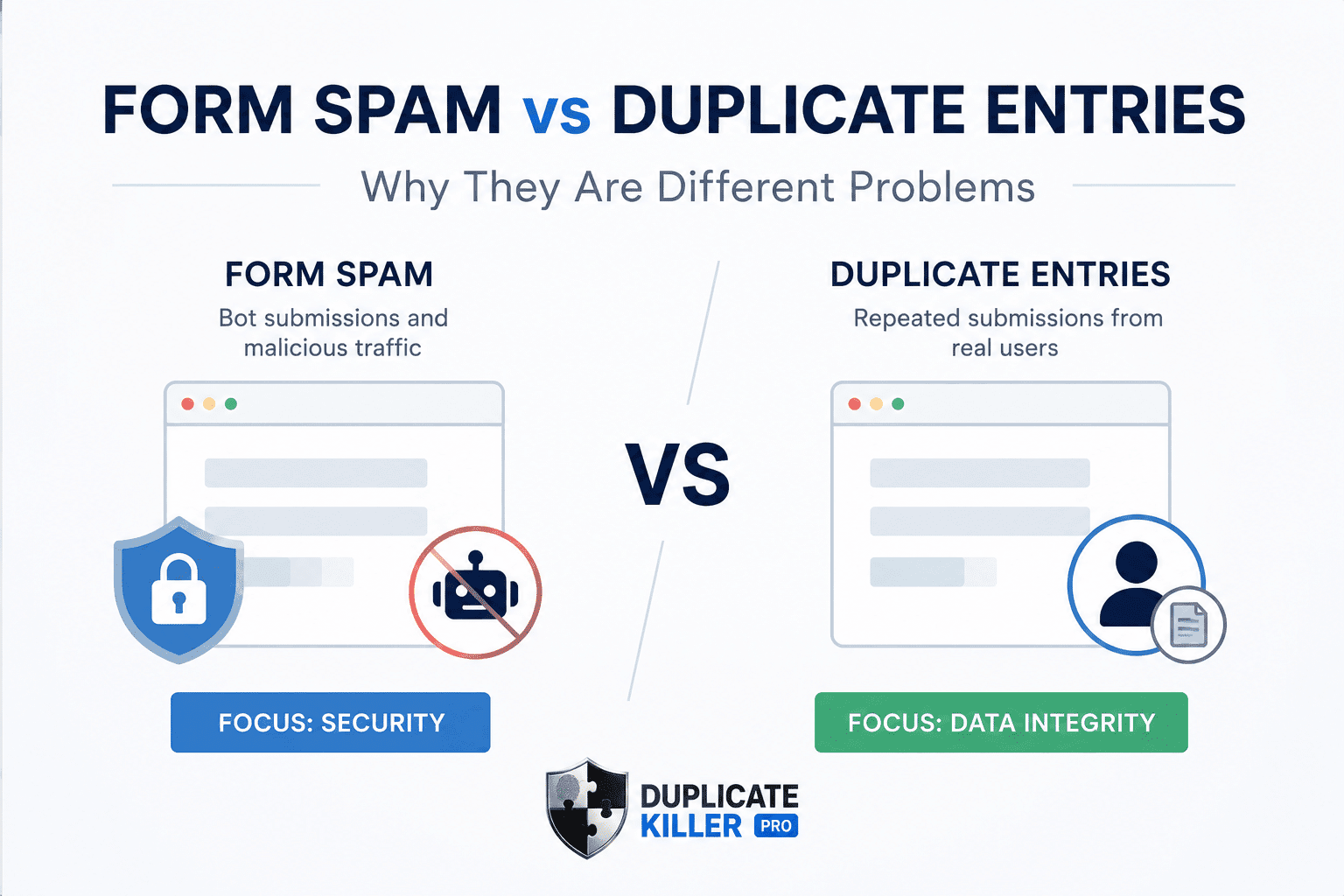
Duplicate entries and form spam are often confused by WordPress website owners. Many businesses install anti-spam plugins successfully, but duplicate entries can still damage CRM systems, analytics, and lead quality. And misunderstanding the difference often leads businesses to install the wrong type of protection. A CAPTCHA plugin may reduce bots successfully, but your CRM can…
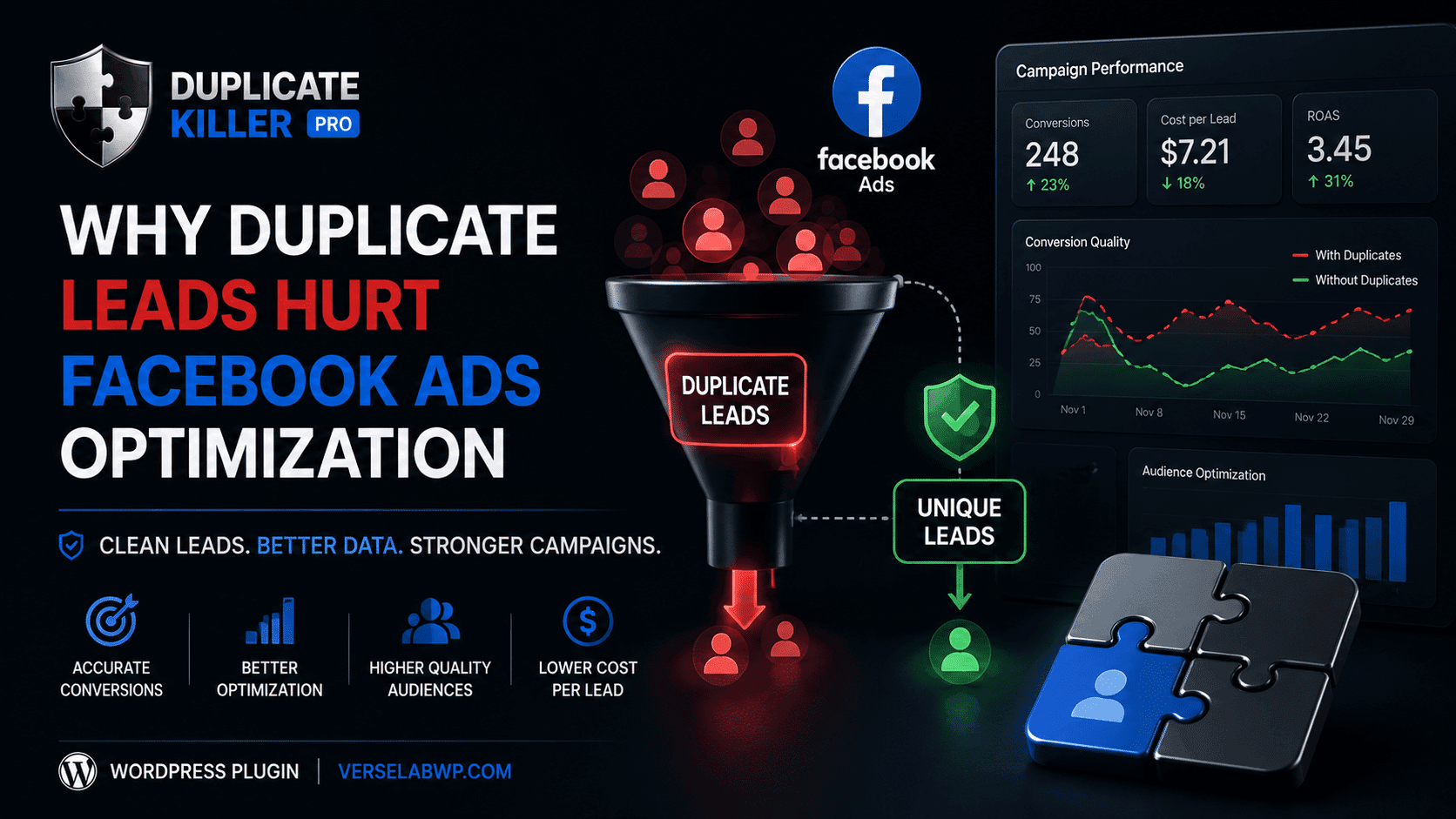
Duplicate leads can seriously damage Facebook Ads optimization without most advertisers realizing it. When duplicate leads enter your CRM repeatedly, your campaigns may start optimizing using inaccurate conversion data and misleading audience signals. They change creatives.They increase budgets.They test new audiences. But many never realize the real problem is hidden inside their lead data. Duplicate…
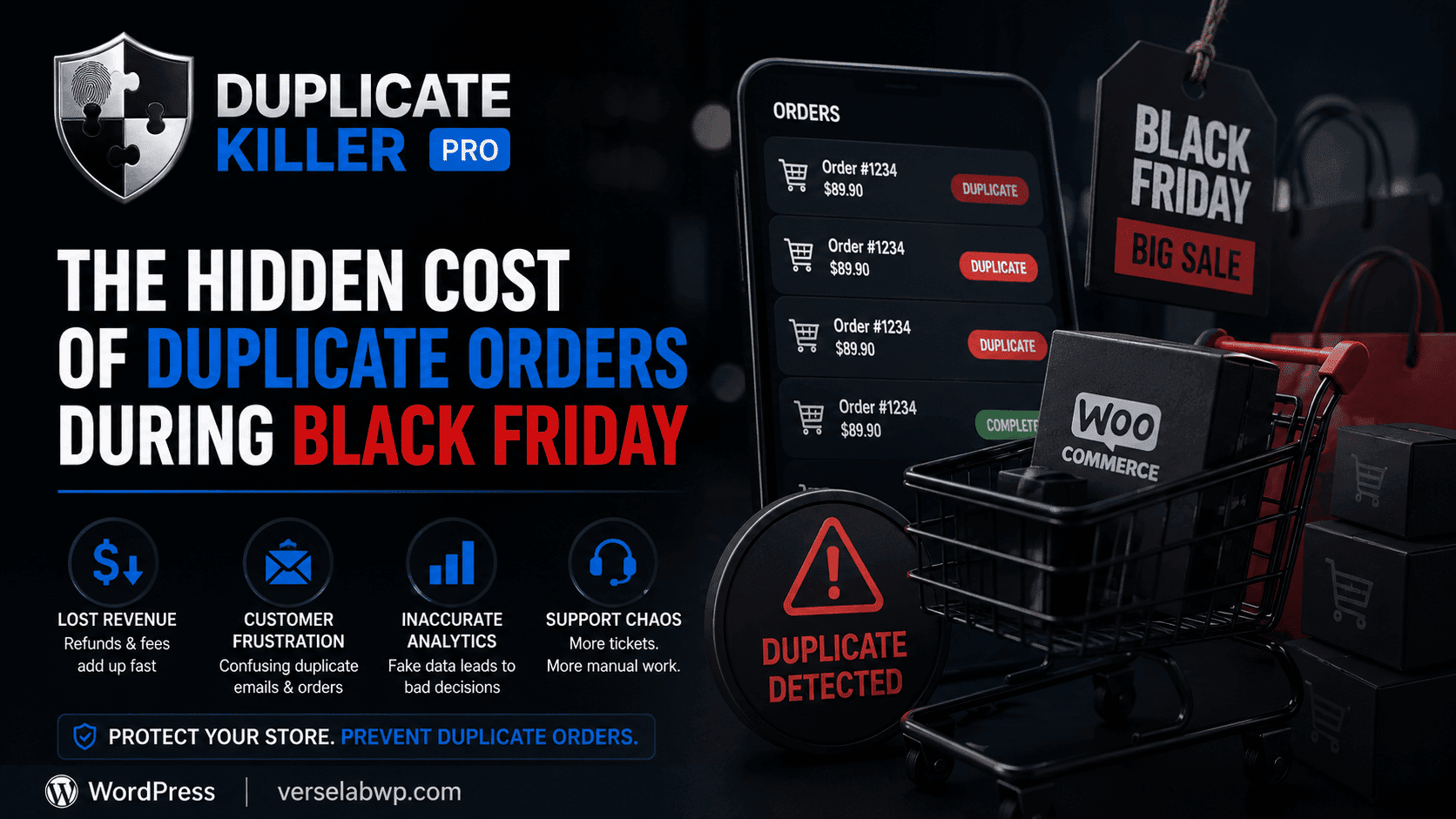
Duplicate WooCommerce orders become a massive problem during Black Friday sales. Customers click checkout buttons multiple times, pages freeze under heavy traffic, and stores suddenly face duplicate payments, refunds, and inaccurate analytics. But for many WooCommerce stores, it also creates a hidden problem that quietly damages operations behind the scenes: duplicate orders. Most store owners…
Contains information related to marketing campaigns of the user. These are shared with Google AdWords / Google Ads when the Google Ads and Google Analytics accounts are linked together.
90 days
__utma
ID used to identify users and sessions
2 years after last activity
__utmt
Used to monitor number of Google Analytics server requests
10 minutes
__utmb
Used to distinguish new sessions and visits. This cookie is set when the GA.js javascript library is loaded and there is no existing __utmb cookie. The cookie is updated every time data is sent to the Google Analytics server.
30 minutes after last activity
__utmc
Used only with old Urchin versions of Google Analytics and not with GA.js. Was used to distinguish between new sessions and visits at the end of a session.
End of session (browser)
__utmz
Contains information about the traffic source or campaign that directed user to the website. The cookie is set when the GA.js javascript is loaded and updated when data is sent to the Google Anaytics server
6 months after last activity
__utmv
Contains custom information set by the web developer via the _setCustomVar method in Google Analytics. This cookie is updated every time new data is sent to the Google Analytics server.
2 years after last activity
__utmx
Used to determine whether a user is included in an A / B or Multivariate test.
18 months
_ga
ID used to identify users
2 years
_gali
Used by Google Analytics to determine which links on a page are being clicked
30 seconds
_ga_
ID used to identify users
2 years
_gid
ID used to identify users for 24 hours after last activity
24 hours
_gat
Used to monitor number of Google Analytics server requests when using Google Tag Manager